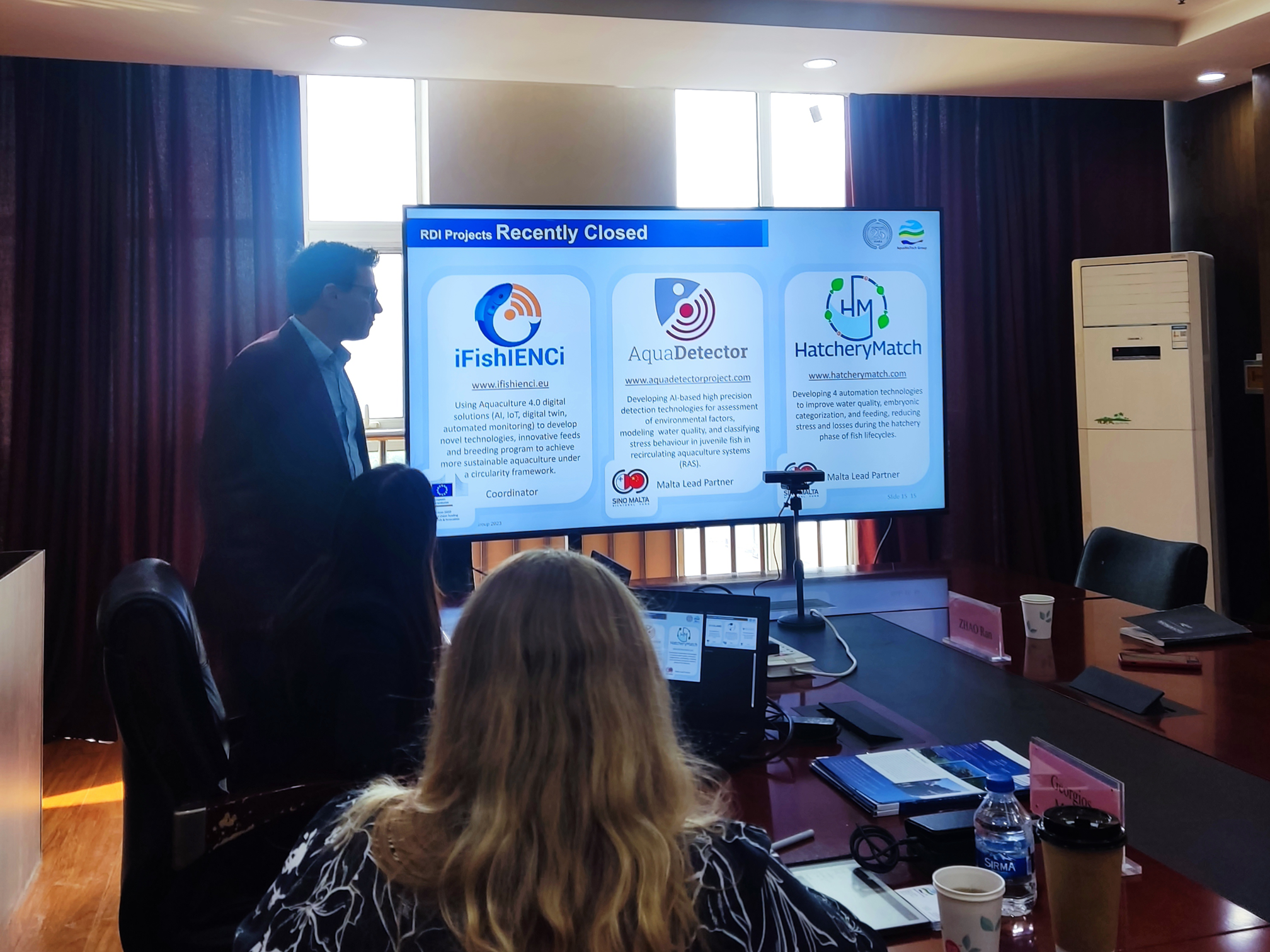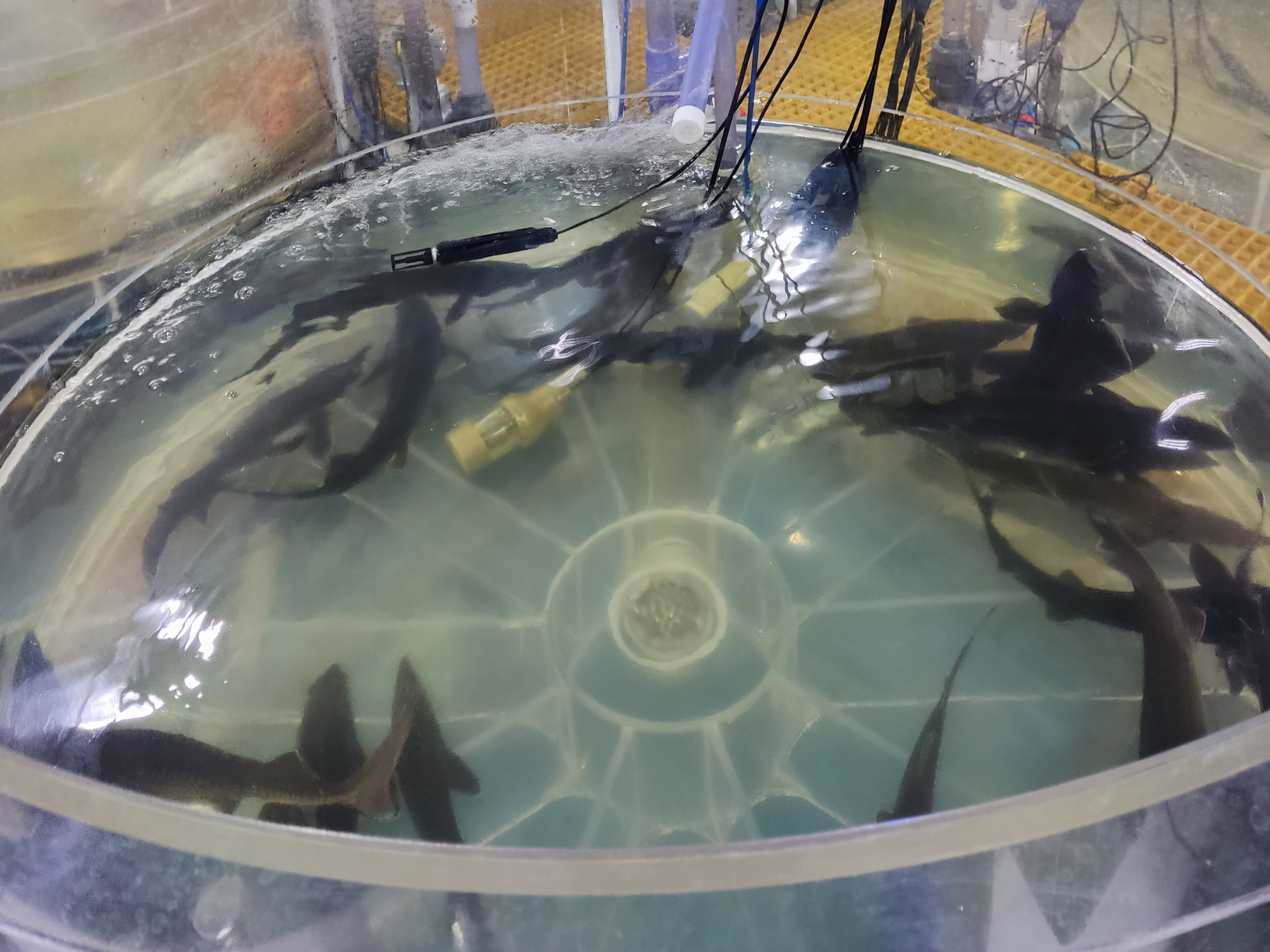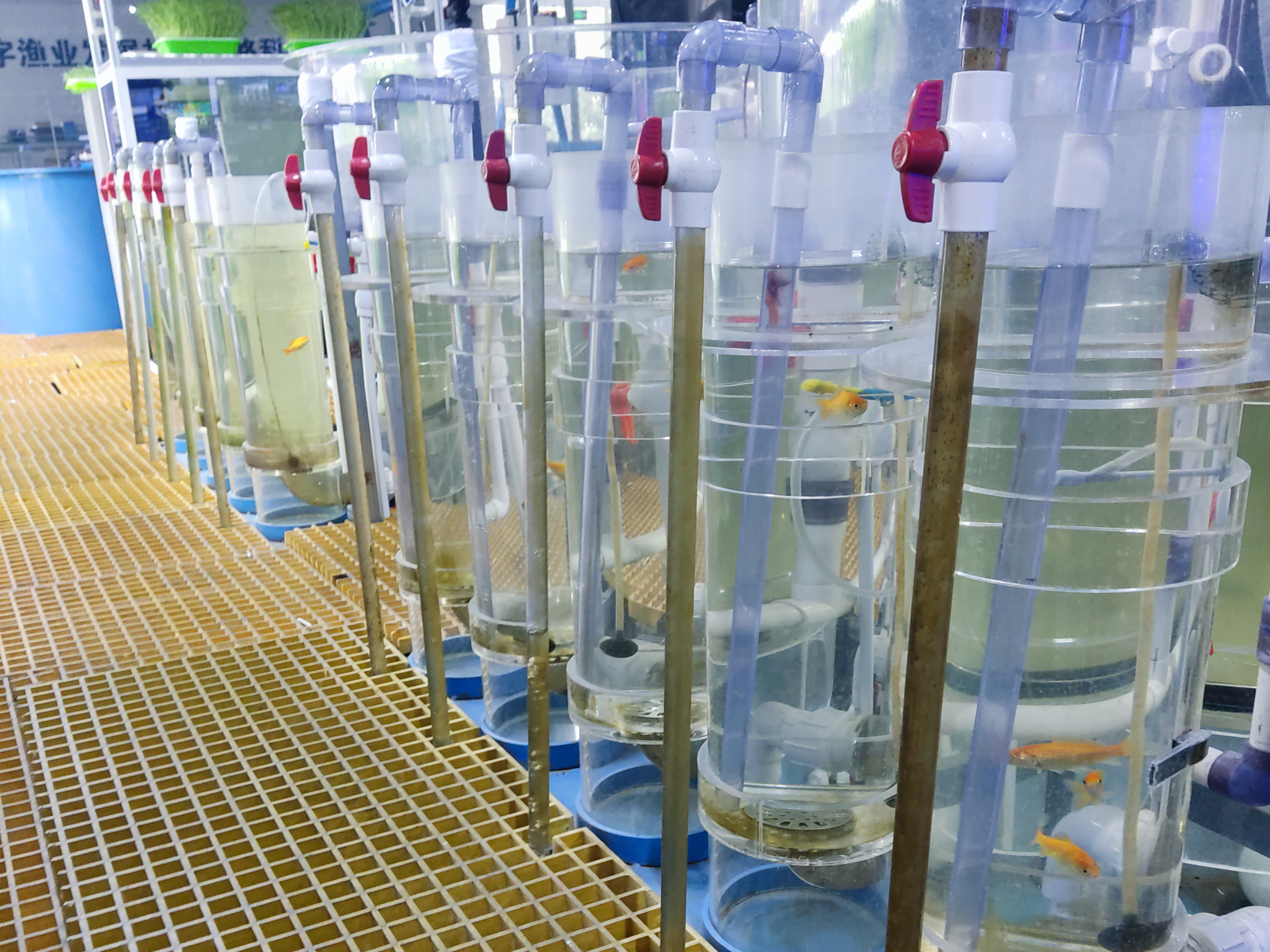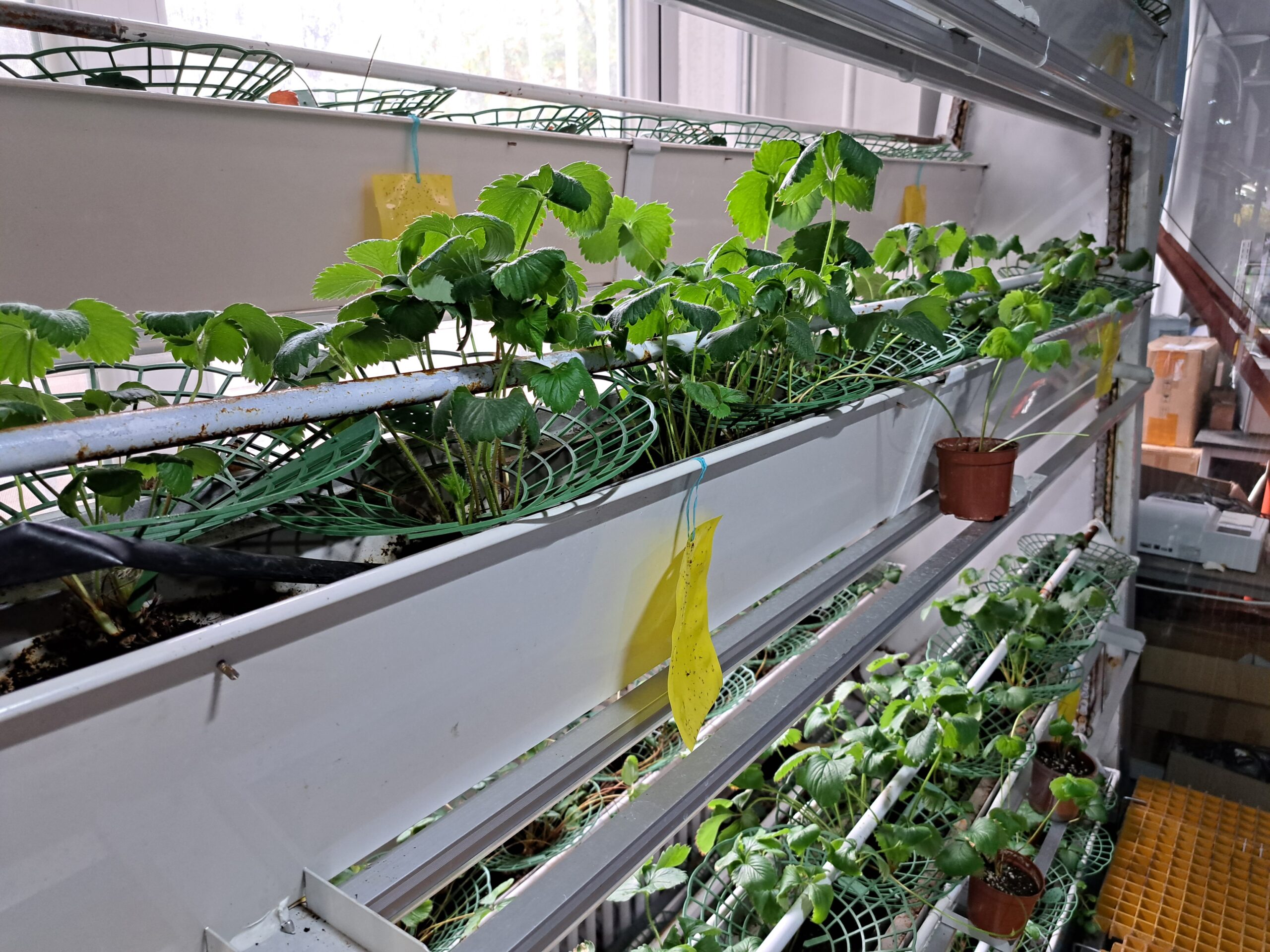
Two weeks ago, representatives of the Maltese company AquaBioTech Group had the opportunity to visit several leading Chinese research-performing organisations actively engaged in the ongoing SINO-MALTA Fund. AquaBioTech Group team had the opportunity to meet in person with the research teams that they have been working with for the past three years, as well as developing new relationships and partnerships.
On Monday 23rd October, the AquaBioTech Group team arrived in Beijing to visit the China Agricultural University – National Innovation Center for Digital Fisheries with whom collaborates in the ongoing project AMBULANT and has previously collaborated in the AquaDetector Project. China Agriculture University is one of the top-ranked national universities in China. The team were shown around the facility labs and engaged in discussions regarding upcoming opportunities for collaboration. Along with being introduced to some of CAU’s work on advanced aquaculture ‘smart’ technologies, one of the highlights of the visit was being able to see the work on the biomimetic robot being created as part of the AMBULANT project.
AMBULANT has the intention to create a biomimetic robot with an intelligent monitoring system for identifying seabed habitats, as well as fish and their biomass in aquaculture. This would be a transformation and upgrade to traditional aquaculture, as the technologies used until now put distress on the living organisms because of their frightening appearance, loud noise and poor concealment. Biomimetic, in this case, means it will physically appear and move as a fish. These robots have high efficiency, high practicality, and low disturbance towards fish stocks. They will support the environmental protection of commercially important species and detect endangered and invasive species. In aquaculture, it will improve fish welfare and monitoring of risk factors, reduce inefficacy in the farming process, as well as further develop monitoring technology, which will lead to economic growth.
Through the AquaDetector Project, the consortium aimed to develop precise detection technologies to visualise water quality distribution, classify fish stress behaviours, and analyse the combined impact of environmental factors on juvenile grouper and trout as reference fish. Histology, biochemistry, and growth will be the three main factors analysed, reflecting fish quality, animal welfare, and production respectively. The coupling correlation model developed was integrated into a monitoring system to achieve smart high precision detection in RAS.