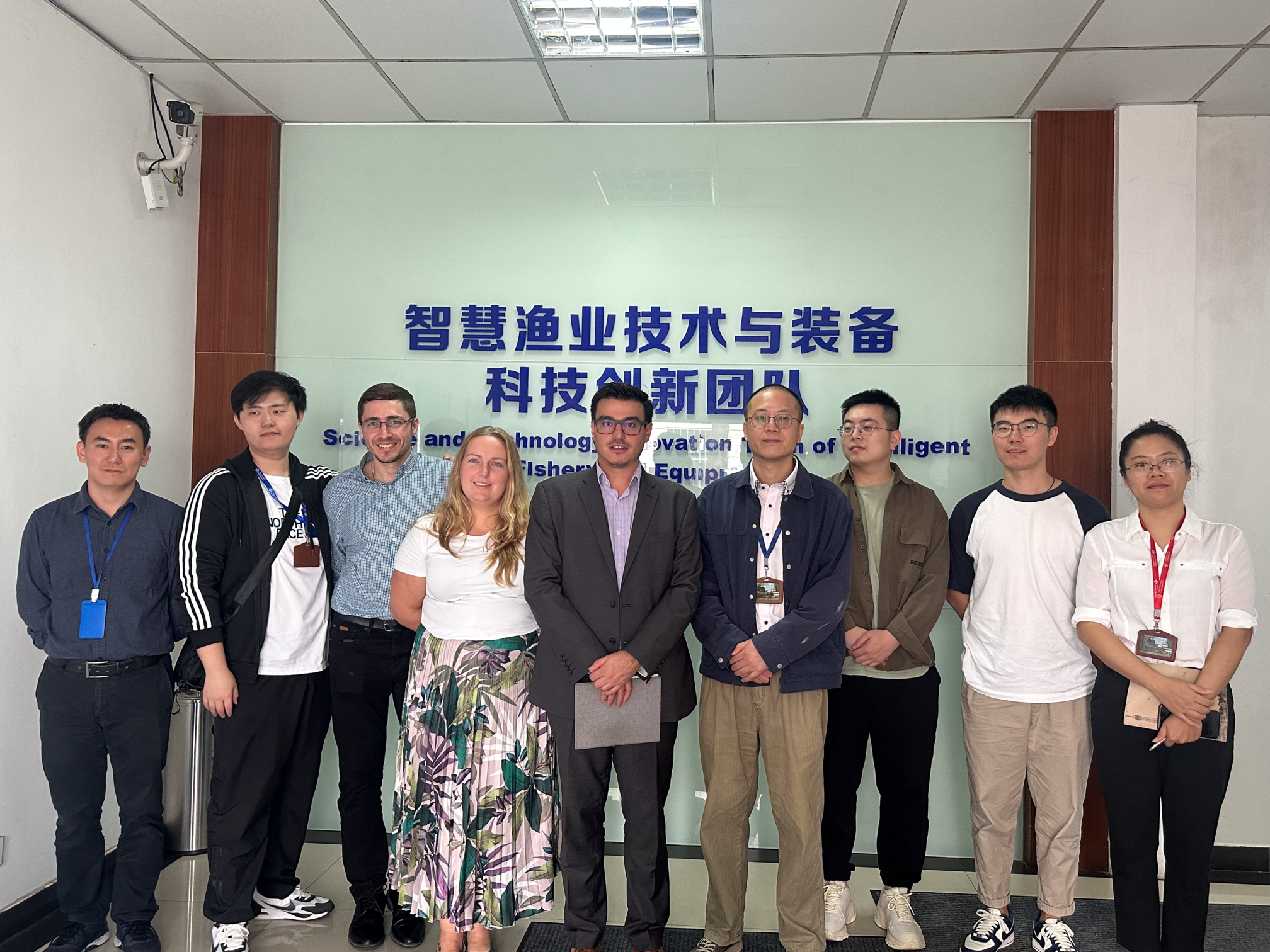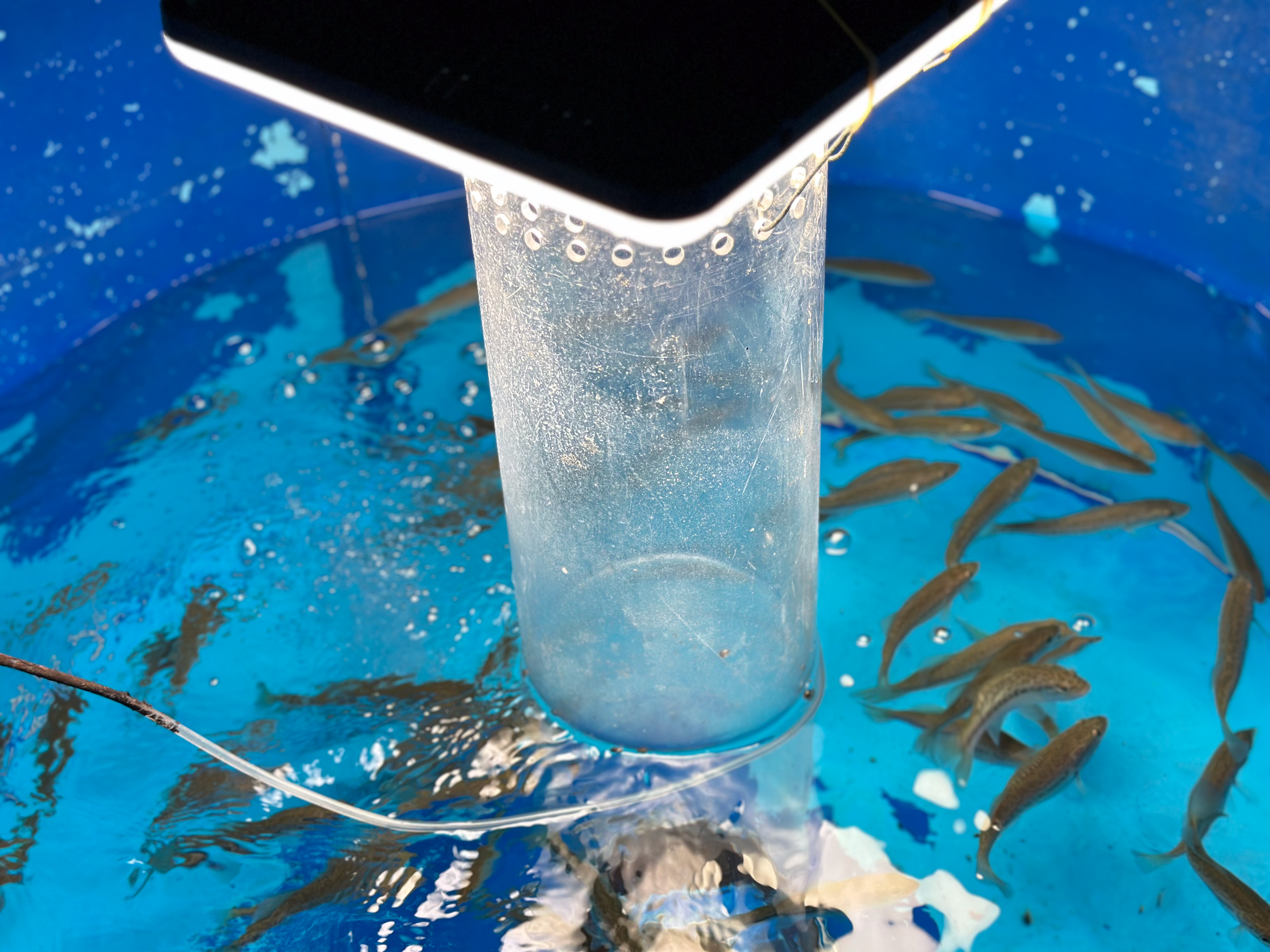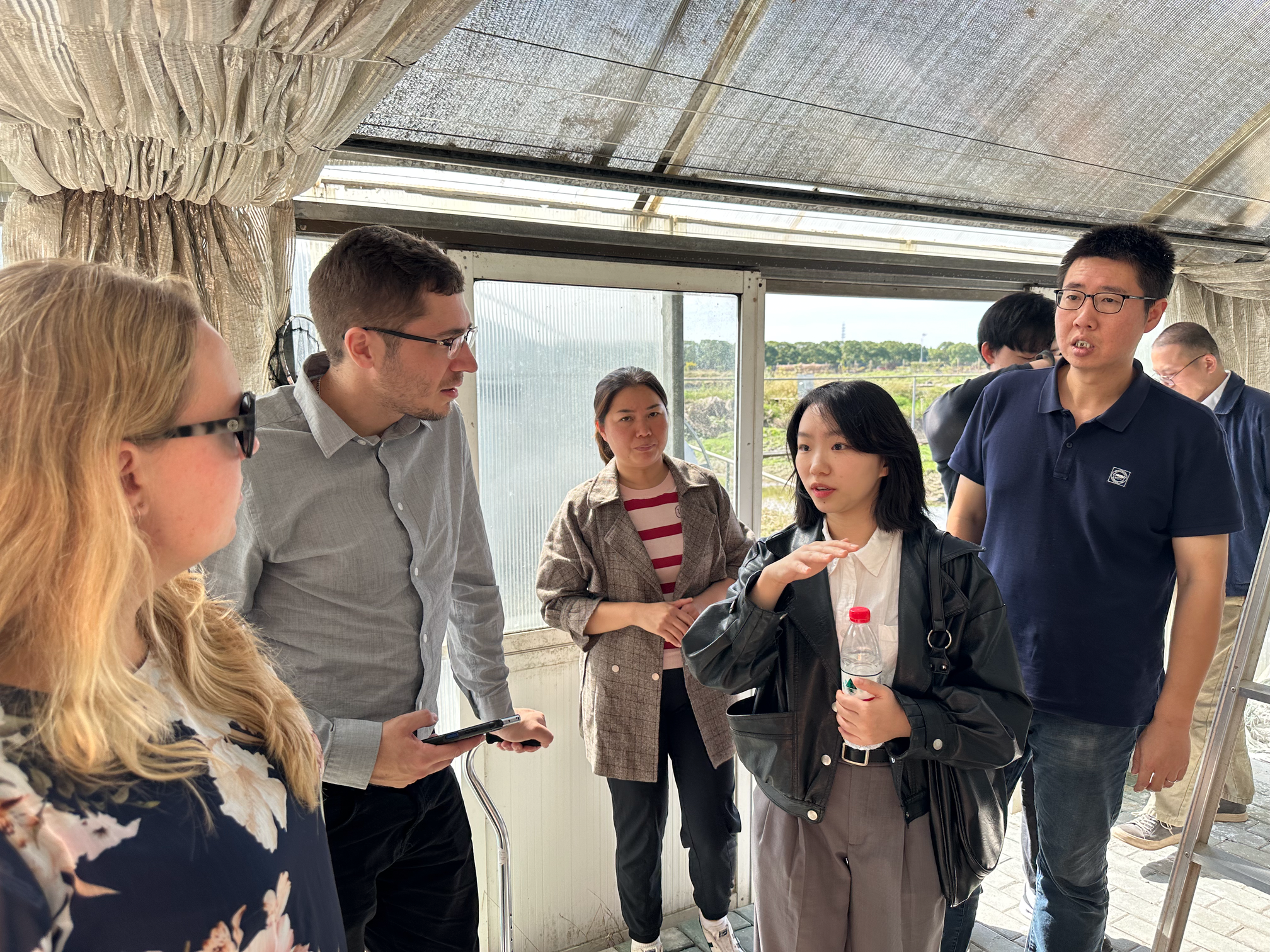
On 27th October, the AquaBioTech Group team visited the Fishery Machinery and Instrument Research Institute of the Chinese Academy of Fishery Sciences laboratories in Shanghai and met with the heads of departments and deputy director to introduce the technical capacities of each organisation and discuss future collaboration activities related to the recently closed HatcheryMatch project and other areas of interest. FMIRI is a key institute engaged in applied basic research and key technology research and development of fishery equipment and engineering. A tour of FMIRI’s research facilities provided insight into some of the cutting-edge developments in Chinese aquaculture and offshore technology. The following day FMIRI organized a visit to their Songjiang Base where they undertake extensive research in the application of pond aquaculture using wetlands as remediation methods for wastewater. They also visited the Rudong Research base in Jiangsu Province where many of the research activities relating to recirculating aquaculture automation technologies and biofloc optimisation are undertaken.
The HatcheryMatch project aimed to develop four new automation technologies to improve water quality, embryonic categorization, and feeding and in turn reduce stress and losses during the hatchery phase of fish lifecycles. Prototypes for live feed systems, ultra-sound disinfection, bottom cleaning devices and a digital, embryonic image analyser were created. A pilot recirculating hatchery was developed integrating these new technologies to reduce stress on marine stocks, lower labour dependence and increase seeding rate.
The Business Development Director of AquaBioTech Group, George Mantas said “On behalf of the AquaBioTech Group we would like to extend a grateful thank you for the incredible hospitality shown to us by all SINO-Malta partners while in China. The journey to upscaling marine aquaculture and transforming freshwater aquaculture in China requires addressing several challenges namely biological, technical, environmental, and competitiveness and the collective efforts of Chinese organisations and companies like AquaBioTech Group are required if we are to achieve rapid progress. The SINO-MALTA Fund offers Chinese and Maltese stakeholders a foundation of collaboration where all parties can benefit from each other’s knowledge and achieve breakthrough innovations that can deliver the ambition of the Belt and Road Initiative for aquaculture development and food security across the globe. It also delivers on the respective Government’s commitments to strengthen the economic ties and deliver bilateral trade increase.”
The Malta Council for Science and Technology (MCST) and the Ministry of Science and Technology (MOST) of the People’s Republic of China together contribute to the SINO-MALTA Fund which supports research, development, and innovation projects between Maltese and Chinese researchers. The SINO-MALTA Fund is part of the Belt and Road Initiative which aims to address the “infrastructure gap” and thus has the potential to accelerate economic growth. Malta and China have a history of collaborative research going back to 2002 and in 2018 Malta and China signed the Belt and Road Initiative (formerly known as the ‘One Belt One Road’) agreement to further support collaborative trading, cultural and research activities between the two countries.